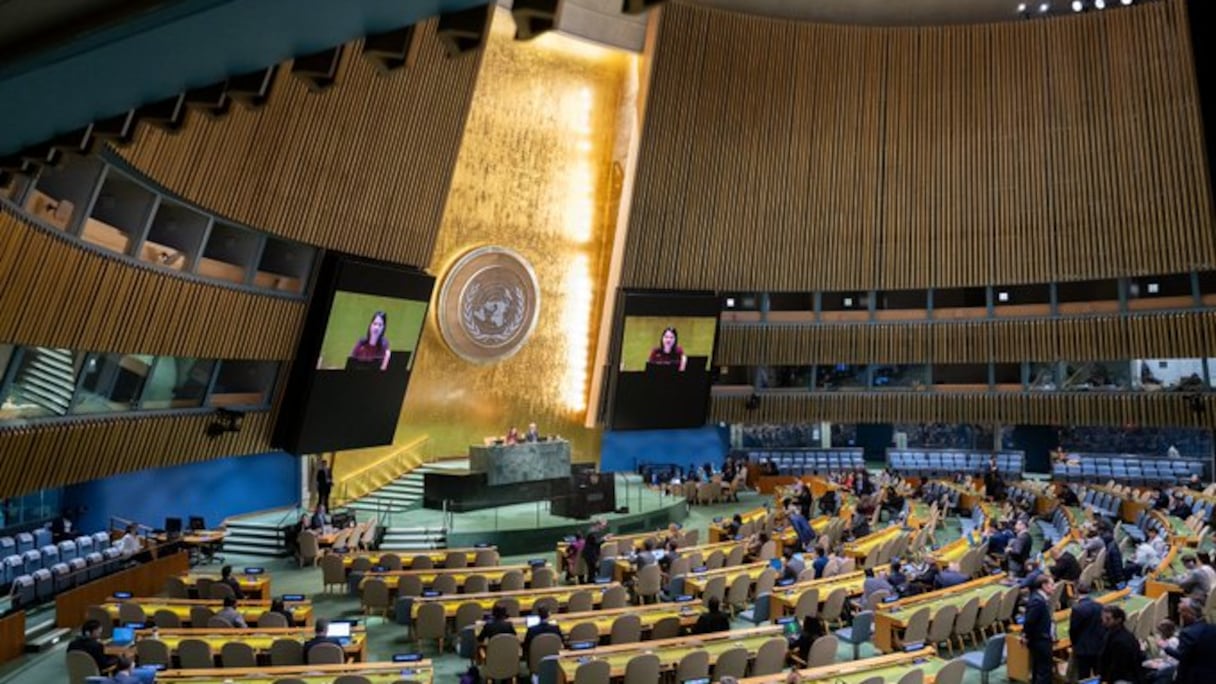
The General Debate will run from September 22 to 26 and resume on September 28 at UN headquarters, where heads of state, government leaders and other senior officials will present their priorities under the session’s theme, “Restoring trust, managing transformation: a United Nations that delivers for all.”
The 81st session opened on September 8 under the presidency of Bangladesh’s Khalilur Rahman. The UN says nearly 130 heads of state and government are expected to attend the high-level week in person.
Read also : UN maritime agency warns global shipping faces mounting security threats
A series of high-level meetings will also address some of the main challenges facing the international community alongside the General Debate.
Conflicts, climate and development
Climate action will feature prominently on September 23, when UN Secretary-General António Guterres convenes a high-level meeting on climate action and a just transition.
The meeting is expected to focus on accelerating the energy transition, strengthening energy security and addressing climate impacts, 10 years after the adoption of the Paris Agreement.
The same day, the General Assembly will commemorate the 40th anniversary of the Declaration on the Right to Development, adopted in 1986.
A separate high-level meeting on September 24 will focus on the risks posed by rising sea levels, with discussions expected to address international cooperation and support for countries and communities most exposed to the threat.
Read also : UN votes for new world map to correct Africa’s distorted size
Pandemic preparedness will take the spotlight on September 25. The one-day meeting will seek to strengthen international cooperation on preventing and responding to future pandemics and other public health emergencies, and is expected to conclude with a political declaration.
The high-level week will also include a meeting on September 28 to mark the 25th anniversary of the Durban Declaration and Programme of Action, which was adopted at the 2001 World Conference against Racism in South Africa.
The meeting will focus on efforts to combat racism, racial discrimination, xenophobia and related intolerance. A political declaration is expected as its outcome.
Nuclear disarmament will close the series of high-level meetings on September 29, with a plenary session dedicated to the International Day for the Total Elimination of Nuclear Weapons.
Sustainable development under pressure
The Sustainable Development Goals will also feature prominently during the high-level week.
The annual SDG Moment, held on September 18, will focus on efforts to accelerate progress toward the 2030 Agenda and highlight initiatives aimed at advancing the goals despite mounting global challenges.
The UN high-level week comes as countries face growing difficulties in meeting the 2030 targets. According to figures cited by Morocco’s official news agency MAP, only 35% of SDG targets are currently on track, while 48% are progressing slowly or have stalled and 18% have regressed compared with 2015 levels.
The discussions will also touch on poverty, food security, access to essential services and financing for development, particularly in developing countries.
Read also : UN urges tougher social media safeguards for children after Meta settlement
Artificial intelligence and other emerging technologies are expected to feature in discussions over how international rules can keep pace with rapid technological change, while debates on peace and security will remain central to the General Debate.
The UN’s 81st session comes at a time of heightened geopolitical tensions and continuing armed conflicts, alongside pressure to revive progress on development and strengthen international cooperation.
The high-level week will therefore address a wide range of issues, from war and climate change to public health, development, racism, nuclear disarmament and technology, with a common focus on the future of multilateral cooperation.