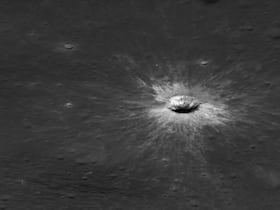
NASA discovers massive lunar crater formed by impact missed in real time
The 222-meter crater formed in 2024 but was only identified more than a year later, giving scientists a rare chance to study the effects of a recent major lunar impact.
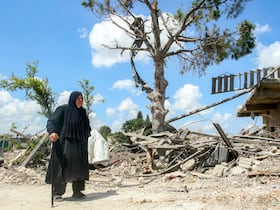
Large-scale war tops global risk concerns, UN survey finds
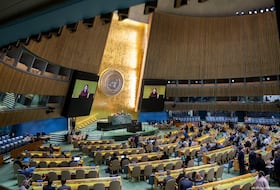
Large-scale war has become the world’s most prominent geopolitical risk, with 36% of experts surveyed by the United Nations saying its effects could reach a significant share of humanity within a year.
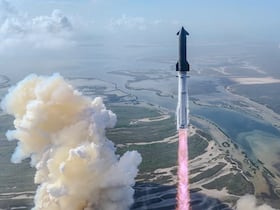
SpaceX targets first Starship orbital flight for September 22
SpaceX is preparing to launch Starship’s 14th flight as soon as September 22, with the company targeting the mission for the rocket’s first attempt to reach orbit around Earth.
OpenAI, Anthropic and Google work on AI oversight body as political obstacles emerge
The proposed industry-led regulator would oversee AI risks, but questions over legislation and fears of excessive industry control could stand in its way.
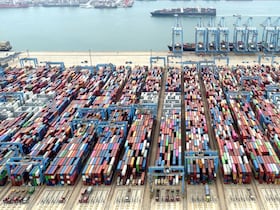
WTO warns global trade system at critical juncture, urges reform
The World Trade Organization has called for reforms to its global trade rules, warning that deeper fragmentation could leave the world economy up to 6.9% smaller by 2050.
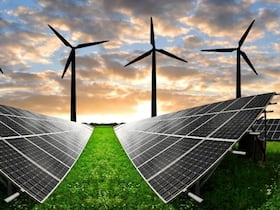
Morocco’s energy transition experience highlighted in Argentina
Morocco’s approach to renewable energy, decarbonization and sustainable resource management was presented at a climate policy meeting in Salta.
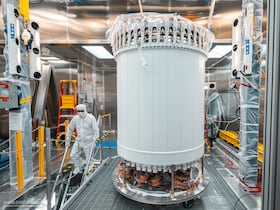
Scientists detect unusual signal in search for dark matter
The LUX-ZEPLIN team says the unusual event is intriguing but cautions that it is too early to claim a dark matter discovery.
NASA and IBM launch AI model to map the Moon and hunt for lunar ice
NASA and IBM have launched an open-source artificial intelligence model designed to help scientists analyze the Moon’s surface, map craters and volcanic features, and identify areas where water ice could be stable.
France submits revised proposal to ban social media for under-15s
France has submitted a revised proposal to ban social media access for children under 15, weeks after the country’s Constitutional Council rejected an earlier version of the measure.
Why has Algeria intervened in Niger?
For Algeria, the Trans-Saharan Gas Pipeline is a priority because its own production is insufficient to supply an EU that has voluntarily deprived itself of Russian gas. Yet if the Trans-Saharan pipeline project were to go ahead, Algeria could export an additional 30 billion cubic meters. It would then become the EU’s leading gas supplier, radically increasing its leverage over the bloc, particularly on what remains a priority issue for Algiers: challenging Morocco’s sovereignty over Western Sahara.