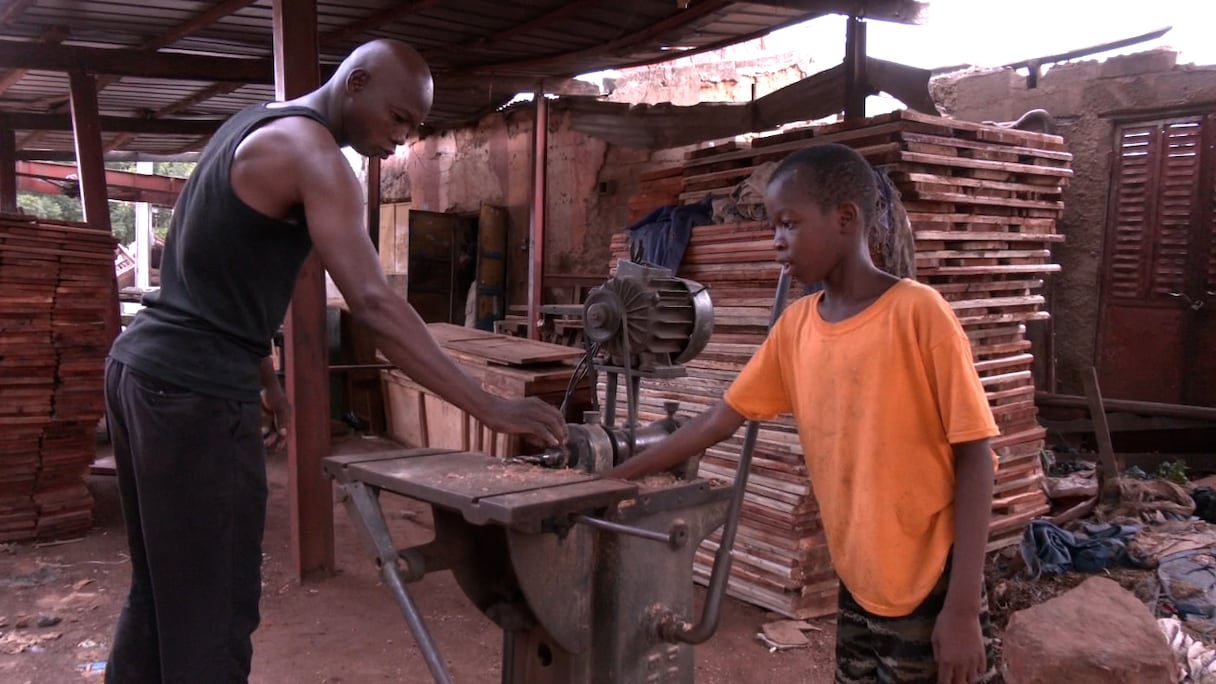
Moroccan training has helped Malian artisans improve their technical skills, learn to use new equipment and explore opportunities for economic independence, according to several beneficiaries who have returned home after training in Marrakech and Rabat.
The artisans received instruction in a range of trades, including mechatronics, woodworking, tailoring and leatherwork. Their accounts highlight the role of skills development in a sector where Mali has access to raw materials but often lacks the equipment and technical training needed to process them.
Mamadou Minkoro Traoré, president of Mali’s Permanent Assembly of Chambers of Trades, said the training had enabled young artisans to acquire new knowledge in their respective fields.
“Artisans in Mali have the capacity to produce locally, but they lack equipment and training,” he said, thanking Morocco for its emphasis on vocational skills development.
A partnership agreement was signed in December 2025, on the sidelines of the International Handicrafts Fair of Mali, by the presidents of Mali’s Chamber of Crafts and the Chamber of Crafts of Rabat-Salé-Kénitra.
Traoré pointed to the potential for cooperation between the two countries, noting that Mali has raw materials such as leather, while Morocco has the technology needed to process them.
In July 2026, Morocco and Mali signed 21 cooperation agreements and memorandums of understanding following a meeting of their joint commission. According to Mali’s Ministry of Foreign Affairs, the agreements cover priority socioeconomic sectors and aim to further strengthen the mutually beneficial partnership between the two countries.
Read also : Mali voices support for Morocco to host 2030 World Cup final
Training in tailoring, leatherwork and woodworking
Fofana Kadiatou Doumbia, a tailor who recently returned from Morocco, said 60 female artisans from Mali and Niger had received training in traditional sewing, hand and machine embroidery, entrepreneurship, leadership and product labeling.
She also highlighted the reintegration component of the Moroccan program, saying it had particularly impressed her. She described it as important for women’s empowerment and economic independence.
Sory Sylla, a leatherworker who also trained in Morocco, said the experience taught him how to stretch hides properly to make them more supple, along with new techniques for cutting leather.
“The training in Morocco gave me more experience and helped me improve my work,” he said. It also gave him the opportunity to operate machinery that was not available in Mali.
Woodworker Lamine B. Traoré said his training focused on operating the machines he uses in his trade and applying techniques to achieve a better finish.
Read also : Morocco sends Mali 1,000 tonnes of fertilizer to support farming
He described the experience as beneficial on several levels, including teaching him the importance of nails and screws in furniture-making. These techniques differed from the practices he had previously followed, in which finishing work was generally left until the end of the process.
A vocational training center in Bamako
The cooperation extends beyond individual training programs. In July 2026, the Mohammed VI Vocational Training Center was handed over to Malian authorities in Bamako.
The center is designed to train 1,000 young people a year across 21 fields, including construction and public works, tourism, hospitality and catering.
The handover represents another step in vocational cooperation between the two countries, with training intended to give young people practical skills across a range of professions.
According to the article, handicrafts account for 24% of Mali’s gross domestic product and provide employment for 40% of the country’s working population.